If you last wore Transitions® ten years ago and hated them, you're not wrong — you had a real reason to. The lenses took forever to clear up, they never worked in your car, and the tinted color looked more muddy than sunglass-black. Search results are still full of those complaints, which is why "transition lenses problems" is one of the most-searched eyewear terms on the internet.
Here's what most of those articles don't tell you: the current generation of photochromic lenses — the same light-reactive technology used in Transitions® — fixes almost every one of those complaints. Below is the honest list of what people hated, what's actually been solved, and what to still watch out for.
Complaint 1: "They take forever to clear indoors"
What was true: The GEN 7 lenses (2014-era Transitions®) took 2–5 minutes to fully clear after coming inside. Long enough that people would keep them on and just squint through slightly-tinted lenses in a restaurant.
What's true now: Transitions® GEN S — the current generation — clears in about 45 seconds, and starts noticeably clearing within the first 10. It's not instant, but it's fast enough that most wearers stop noticing.
Complaint 2: "They don't work in the car"
What was true: Standard Transitions® are triggered by UV light. Car windshields block ~99% of UV. Result: your lenses stay clear inside a car even in blazing sun, which is exactly when you want them dark.
What's true now: Two options solve this. Transitions® XTRActive activates on both UV and visible light, so it darkens (partially) behind a windshield. Transitions® Drivewear is specifically engineered for driving and darkens even more inside a car. If you drive a lot, either one is a huge upgrade over classic Transitions®.
Complaint 3: "The color looks weird"
What was true: Early Transitions® had a distinctive greenish-brown tint that photographed poorly and didn't feel as "sunglass-y" as a real pair of sunglasses.
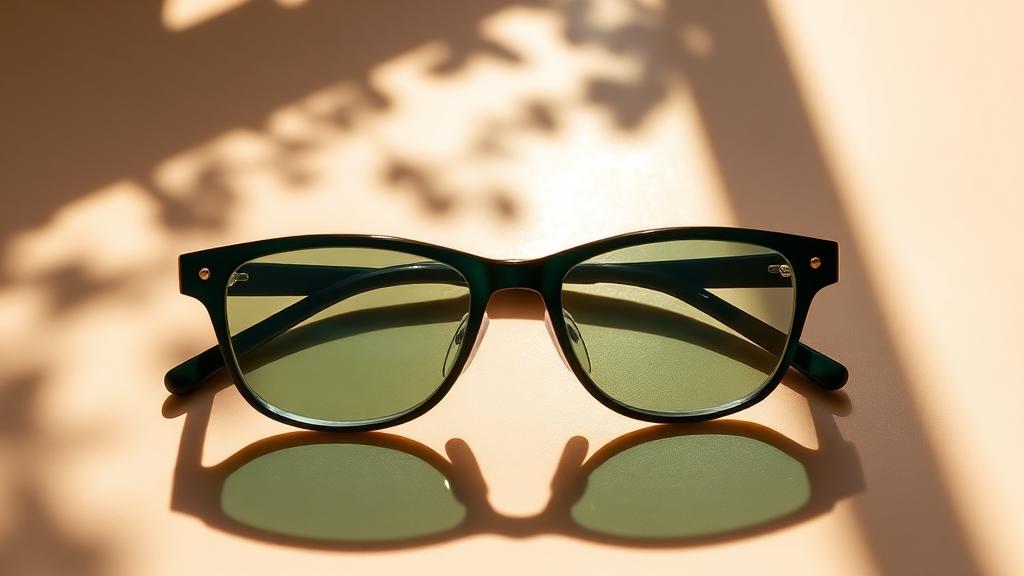
What's true now: Current Transitions® come in six neutral colors — including graphite gray, brown, and sapphire — that look and feel like real sunglasses when activated. XTRActive lenses in particular reach a darker, more neutral tint than any prior generation.
Complaint 4: "They cost too much for what you get"
This one's fair, but it's mostly a brand-name markup problem. At a chain optical shop, adding Transitions® to a pair of glasses can easily cost $150–$250 on top of the lens price. That's a lot for a coating.
The same photochromic technology exists without the Transitions® label — and that's where we come in.
What still isn't perfect
Being honest: photochromic lenses will always be a compromise versus dedicated sunglasses.
- They don't get quite as dark as a real pair of sunglasses (roughly 80% of the way there).
- Cold temperatures make them darken further and clear more slowly.
- They're a coating; over years of heavy use, the photochromic response fades slightly.
For someone who wants "one pair I can wear everywhere without swapping," that's a fair trade. For someone who wants the darkest, sharpest sunglass experience possible in bright light, a dedicated pair of prescription sunglasses is still the better choice.
How LensOnUs helps
We use premium photochromic lenses — the same light-reactive technology as Transitions® — without the brand-name markup. They darken in sunlight, clear indoors, and are cut in our lab with the same care we put into every lens. If you want the convenience of Transitions® without paying the Transitions® price, our photochromic replacement lenses are the practical alternative.
Frequently asked questions
Why don't Transitions® lenses work inside my car?
Modern car windshields block most UV light, which is what triggers photochromic lenses to darken. The newest generation of Transitions® (GEN S / XTRActive) activates on visible light too, so it will darken behind a windshield — older generations don't. If you drive a lot, this is the single most important detail when picking a photochromic lens.
How long do Transitions® lenses take to clear up indoors?
The newest generation clears in about 45 seconds. Older Transitions® (GEN 7 and earlier) took 2–5 minutes, which is where the 'I'm walking around indoors looking like I'm hiding something' complaint came from. If you last tried Transitions® more than a few years ago, they clear far faster now.
Do Transitions® lenses ever fully clear?
Indoors, yes — completely clear. Some wearers of older-generation lenses reported a slight residual tint, but the current formulations are optically clear when inactive.
Are Transitions® worth it if I already own sunglasses?
Depends on your habits. If you swap between glasses and sunglasses fluidly and it doesn't bug you, keep doing that. If you constantly find yourself squinting because you didn't grab your sunglasses, or you don't want to carry two pairs, Transitions® solve that pain for a one-time upcharge.
Do Transitions® come in polarized?
Yes — Transitions® Xtractive Polarized. This is one of the few photochromic options that also gives you the glare-cutting benefit of polarization. It's more expensive but the right pick for anyone who drives, fishes, or spends time on water.