Single vision lenses are the most common prescription lenses in the world. If you're under 40 and wear glasses, they're almost certainly what you have. The name is exactly what it sounds like: one prescription, one focal distance, across the entire lens. Simple, effective, and dramatically cheaper than the alternatives.
Here's what they do, when they're the right choice, and what you can expect to pay for a quality pair.
What single vision lenses correct
A single vision lens has one prescription cut into the entire piece of plastic. It corrects for exactly one distance:
- Distance-only single vision — for nearsightedness (myopia). These help you see clearly far away — driving, watching TV, reading a whiteboard. Objects up close are still clear because your eyes can naturally focus near.
- Reading-only single vision — for farsightedness or presbyopia when someone only needs help up close. Books, phones, needlework. Distance stays blurry because these are optimized for near work.
- Intermediate single vision — less common, cut specifically for computer distance (arm's length). Useful for people who spend all day at a monitor and don't want progressives.
How to tell if single vision is what you need
Look at your prescription. If it has a "SPH" (sphere), a possible "CYL" (cylinder) for astigmatism, and an "AXIS" — but no "ADD" value — you need single vision lenses.
If your prescription has an ADD number (typically written as +1.00, +1.50, +2.00 up to about +3.00), that means your eye doctor is prescribing two different powers — one for distance, one for reading. You'll need either bifocals or progressives to get both in one lens.
Roughly speaking: most people under 40 have single vision. Most people over 45 have started needing an add.
Lens material and thickness
"Single vision" refers to the prescription pattern, not the material. Two people with single vision lenses can have very different lens thicknesses depending on their prescription strength and the material chosen.
- Standard CR-39 plastic (1.50 index) — the baseline. Works well for mild prescriptions up to about ±2.00.
- Mid-index (1.60) — about 15% thinner. Good for moderate prescriptions.
- High-index (1.67 or 1.74) — 25–35% thinner. What you want for stronger prescriptions to avoid "coke bottle" lens edges.
- Polycarbonate — thinner and much more impact-resistant. Standard for kids' glasses and sports glasses.
You don't have to figure this out yourself. For most prescriptions, standard polycarbonate lenses are thin and light enough — we don't push a thinner lens you don't need. For stronger prescriptions, we automatically upgrade to a thinner high-index lens above 4.00 diopters (1.67) or above 9.00 diopters (1.74), so your lenses always look proportional in your frames. The upgrade is automatic, priced at +$40 for 1.67 or +$80 for 1.74.
Coatings included as standard
Every single vision lens we cut ships with:
- Anti-reflective coating (kills glare on the lens surface)
- Scratch-resistant hard coat
- 100% UV protection
- Hydrophobic finish (water and smudges wipe off cleanly)
Optional add-ons include blue light filtering (for screen-heavy days), photochromic Transitions, and polarized sun tints.
How LensOnUs helps
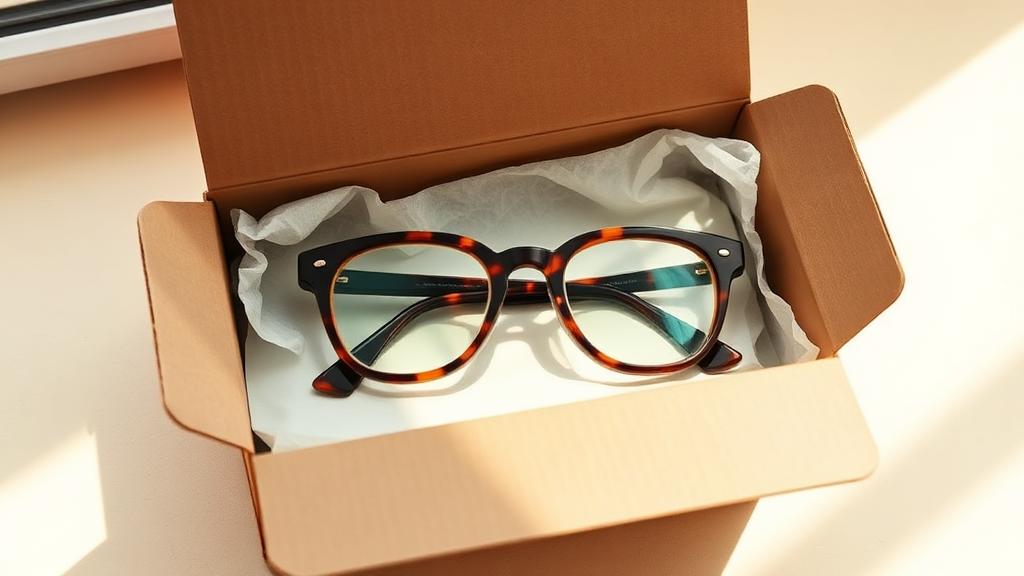
Single vision lenses are our most-ordered lens type — starting at $79 per pair including all the standard coatings above. Send us the frames you already own, and we'll cut and fit new single vision lenses in our Utah lab, ship them back within a week, and stand behind them with a 30-day satisfaction guarantee. That's typically 40–60% less than what a chain optical shop will charge you for the same job.
Frequently asked questions
Do I need single vision lenses or progressives?
If your prescription only corrects one distance — near, intermediate, or far — you need single vision. If your prescription has both a distance value AND an 'ADD' value (usually written +1.00 to +3.00), you have presbyopia and need bifocals or progressives. Most people under 40 get single vision; most people over 45 need progressives.
How much do single vision lenses cost?
Our single vision lenses start at $79 including anti-reflective coating, scratch-resistant hard coat, and 100% UV protection. Add-ons like blue light filtering, photochromic (Transitions), or polarized sun tints are optional upgrades. Free shipping both ways is included.
What's the difference between standard and high-index single vision?
The 'index' refers to how thin the lens material is for a given prescription strength. Standard CR-39 plastic works fine for mild prescriptions. High-index (1.60, 1.67, or 1.74) makes the lens 15–35% thinner — noticeable in stronger prescriptions. We automatically upgrade to a thinner lens on strong prescriptions at no extra cost, so you don't have to figure this out yourself.
Can I get single vision reading glasses only?
Yes. If you only need help with close-up work (reading, phone, needlework), we can cut single vision reading lenses. Just make sure your prescription is for near-vision only — a full reading-only prescription looks different from the near portion of a bifocal/progressive prescription.
How long do single vision lenses take to make?
5–7 business days from when your frames arrive at our Utah lab. Simpler than progressives, so they often ship on the faster end of that window.