"Polarized" is one of those words optical shops throw around like everyone knows what it means. Most people nod along and hope for the best. In plain English: a polarized lens has a built-in filter that blocks a specific type of light — the harsh, horizontal glare that bounces off flat surfaces. Everything else about the lens works normally.
It's the difference between "dark sunglasses" and "sunglasses that actually let you see what's in front of you on a bright day near water." Once you've experienced it, it's hard to go back.
The physics, in one paragraph
Sunlight travels in waves vibrating in every direction. When light hits a flat surface — a lake, a wet road, a car hood, snow, a countertop — most of the reflected light comes back oriented horizontally. Your eye reads that concentrated horizontal light as harsh, painful glare. A polarized lens has microscopic vertical slats built into it, like Venetian blinds tilted 90°. Vertical light passes through freely. Horizontal light is blocked. Glare disappears; everything else looks normal.
Where you'll notice it most
The situations where polarized lenses are a game-changer:
- Driving. The strip of glare that appears on your dashboard or the road ahead in bright sun mostly vanishes.
- On or near water. Fishermen wear polarized lenses specifically because you can see through the water surface instead of just seeing sky reflected in it.
- Snow. The brutal glare off a snowfield becomes tolerable.
- Long stretches of outdoor time. Because your eyes aren't fighting glare, you feel less fatigued at the end of a day.
The few situations where polarized backfires
Being honest, polarized isn't for everyone:
- LCD screens can look strange. Phone screens, dashboards, ATMs, and airplane cockpit instruments all emit polarized light. Through polarized sunglasses, they can dim, show rainbow patterns, or (at certain angles) go black entirely. Rotating the screen or tilting your head usually fixes it, but it's annoying.
- Pilots and some heavy-equipment operators can't wear them — instrument visibility is safety-critical.
- On snow or ice, polarization hides some reflective cues a skier or driver would normally use to spot slick patches. Not a dealbreaker, but worth knowing.
Polarized vs. tinted vs. mirrored vs. UV
These get confused constantly. Quick reference:
- Tinted — the lens is dark. Reduces overall brightness. Doesn't target glare specifically.
- Mirrored — a reflective coating on the outside of the lens. Cosmetic mostly; slightly reduces brightness.
- Polarized — a filter inside the lens that specifically kills horizontal glare.
- UV protection — blocks invisible ultraviolet radiation. This is a health thing, not a comfort thing. All our lenses include it standard.
A high-end pair of prescription sunglasses often has all four: polarized filter, tint, mirror coating, and UV protection.
How LensOnUs helps
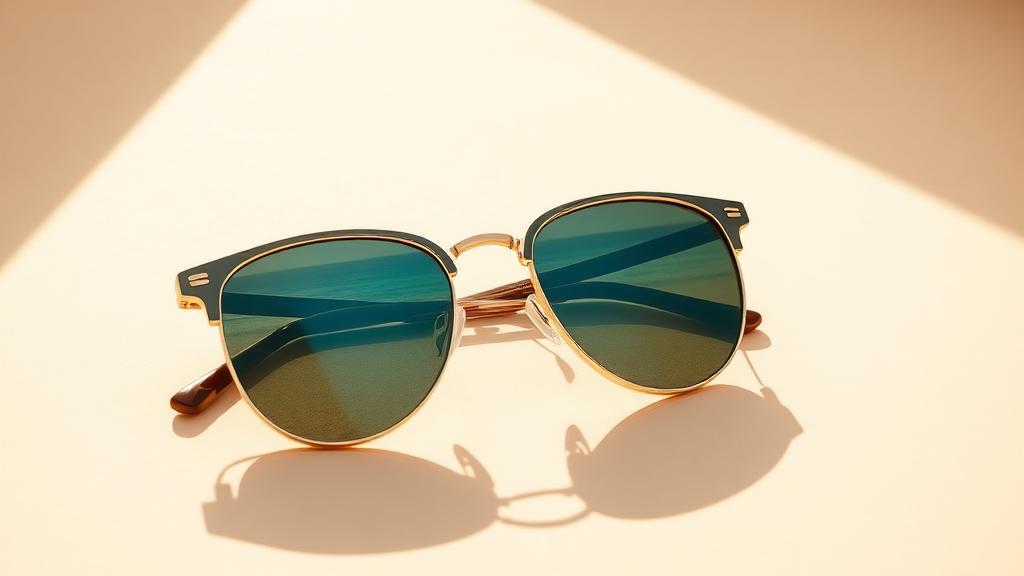
We cut prescription polarized lenses in any lens type — single vision, progressive, bifocal — in a range of tint colors (gray, brown, green). Send us your frames and we'll turn them into a real pair of prescription sunglasses. If you're on the fence, see our polarized sunglasses options or ask our opticians before you order.
Frequently asked questions
What does 'polarized' actually mean?
A polarized lens has a built-in filter that blocks light waves vibrating in one direction — specifically, the horizontal ones that bounce off flat surfaces like water, roads, snow, and car hoods. Regular sunglasses just dim everything uniformly. Polarized lenses specifically kill glare while leaving other light untouched.
Are polarized lenses worth the extra cost?
If you drive a lot, fish, boat, ski, or spend real time outdoors — yes, dramatically. If you mostly wear sunglasses casually, standard tinted lenses do a similar job for less money. The clearest test: if you've ever had to shield your eyes from road glare or squint at a lake, polarized will noticeably fix that.
Do polarized lenses have downsides?
A few. LCD screens (phone, dashboard, ATM) can look dim or show rainbow patterns through polarized lenses at certain angles. Pilots can't use them because they interfere with cockpit displays. And on snow or wet pavement, polarized lenses can hide icy patches by removing the reflection you'd normally use to spot them.
Can I get polarized prescription lenses?
Yes. You can order polarized in single vision, progressive, or bifocal — with your prescription cut into the same lens. That's exactly what we do here.
Are polarized and UV protection the same thing?
No. UV protection blocks invisible ultraviolet radiation that damages your eyes over time. Polarization blocks visible glare. A lens can have one, both, or neither. All our lenses include 100% UV protection standard, whether you add polarization or not.