If you're over 40 and starting to hold your phone at arm's length to read a text message, you've met presbyopia — the age-related loss of near focus that eventually catches up with everyone. For contact-lens wearers, the two main solutions are bifocal (multifocal) contacts and monovision. This guide covers the first.
Quick note: LensOnUs is a prescription lens lab for eyeglasses, not contacts. We wrote this guide because searchers ask about it constantly. If you actually wear glasses, you probably want our bifocals vs. progressives guide instead.
What "bifocal contacts" actually means
The term is a bit of a holdover. In eyeglasses, "bifocal" means two distinct focal zones with a visible line between them. In contact lenses, almost every modern product marketed as a "bifocal" is really a multifocal — a lens with a smooth blend of powers rather than two hard zones. The industry uses the terms interchangeably.
How multifocal contacts work
There are two main designs:
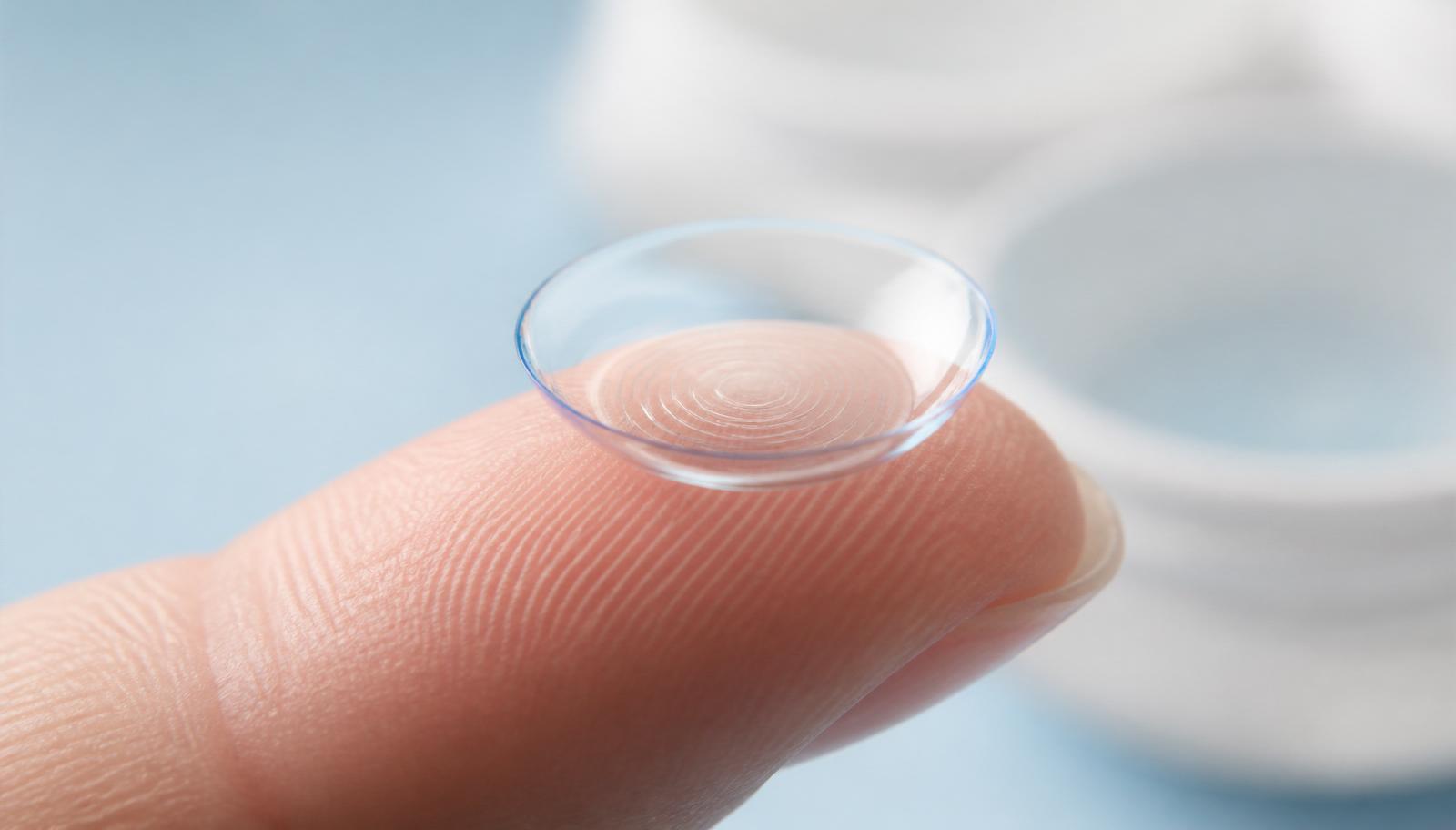
- Simultaneous vision (concentric rings). The lens has alternating rings of near and distance power stacked from the center outward. Both images land on your retina at the same time, and your visual system learns to attend to whichever image is sharp for what you're currently looking at. Almost all soft multifocal contacts use this design.
- Translating (segmented) designs. Rare in soft lenses, more common in rigid gas-permeable (RGP) lenses. The near portion sits at the bottom of the lens and the lens shifts up slightly when you look down to read — mimicking how bifocal glasses work.
Bifocal contacts vs. monovision
Monovision is the classic alternative: your dominant eye wears a distance contact, your non-dominant eye wears a reading contact, and your brain suppresses whichever eye isn't sharp for the current task. It's simpler, cheaper, and adapts fast — but you give up some binocular depth perception, which matters for driving and sports.
Multifocal contacts keep both eyes working together at every distance. Contrast is slightly softer than a single-vision lens because both near and far images are always present, but most wearers say the trade-off is worth it. If you spend a lot of time driving at night, discuss both options with your optometrist.
Popular brand families
These are the multifocal contact families you're most likely to be fitted with. Your optometrist picks based on your prescription, corneal shape, tear film, and your near-vs-distance workload — this isn't a ranking.
- Alcon — Air Optix Aqua Multifocal (monthly), Dailies Total1 Multifocal (daily), Precision1 Multifocal (daily)
- CooperVision — Biofinity Multifocal (monthly), Proclear Multifocal (monthly), MyDay Multifocal (daily)
- Johnson & Johnson — Acuvue Oasys Multifocal with PupilOptimized Design (2-week), Acuvue Moist Multifocal (daily)
- Bausch + Lomb — PureVision2 Multifocal (monthly), Biotrue ONEday for Presbyopia (daily)
Adaptation and realistic expectations
Give any multifocal fit 1–2 weeks before you judge it. During the first few days, distance objects can look slightly hazy and text can feel like it "floats" as your brain figures out which image to attend to. If things haven't clicked after 3 weeks, the fit or add power is probably wrong — go back to your optometrist for a swap rather than pushing through.
Realistic expectations: multifocal contacts get most wearers out of reading glasses for most tasks. Very small print in low light, or long reading sessions, may still be easier with a cheap pair of readers over your contacts.
What if you want glasses instead?
If you're actually researching lenses for the frames on your face, you want progressives, not bifocals — see our bifocals vs. progressives guide. We cut both, ship anywhere in the US, and start at $149 for bifocals or $199 for progressives with digital free-form design included.
Frequently asked questions
What are bifocal contact lenses?
Bifocal (or multifocal) contact lenses correct both distance and near vision in a single lens. Most modern designs use concentric rings of alternating near and far power on the same lens — your visual system learns to pick out whichever ring matches what you're looking at. A smaller number of designs use a segmented, translating design that works more like bifocal glasses.
Bifocal contacts vs. monovision — which is better?
Monovision uses a distance contact in one eye and a reading contact in the other; your brain suppresses whichever eye isn't in focus. It's cheaper and adapts quickly, but you lose some depth perception. Multifocal contacts keep both eyes working together, which most wearers find more comfortable for driving and general daily use — at the cost of slightly softer contrast.
What brands make bifocal / multifocal contacts?
The most common families are Air Optix Aqua Multifocal, Biofinity Multifocal, Dailies Total1 Multifocal, Acuvue Oasys Multifocal, and PureVision2 Multifocal. Your eye doctor picks a brand and 'add power' based on your prescription, tear film, and how much time you spend on near vs. distance tasks.
How long does adaptation take?
Most wearers adapt in 1–2 weeks. During that window, distance can feel slightly hazy and reading can feel like it 'floats' until your brain calibrates. If it hasn't clicked after 3 weeks, it's usually a fit or add-power issue — ask your optometrist to try a different design.
Do you sell bifocal contact lenses?
No — LensOnUs is a prescription lens lab for eyeglasses. We cut fresh lenses for frames you already own, including bifocals and progressives. For contacts, you'll need to work with your optometrist. If you wear glasses and are researching bifocals, our bifocals-vs-progressives guide is probably what you're actually looking for.